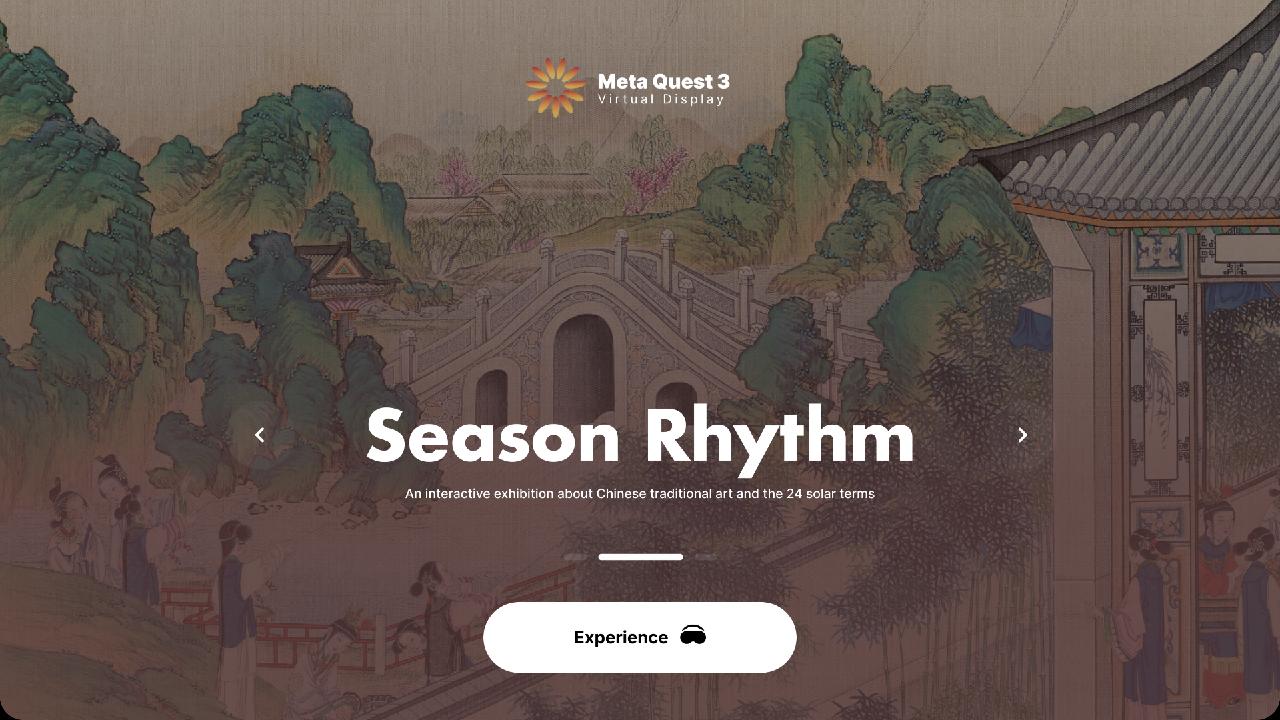
Season Rhythm is a VR exhibition built around the 24 solar terms. Visitors step inside traditional Chinese paintings and experience spring, summer, autumn, and winter from within. Part game and part exhibition, it was my first project after moving from art history research into design, and my first time working with Unity and VR.
Over four weeks, I developed the concept, curated the content, designed the interaction flow, and built the spring section as a working Unity prototype for VR exploration and light interaction. The 24 solar terms distil an ancient Chinese understanding of time and are closely connected to traditional painting. I wanted to reinterpret that relationship through a contemporary digital experience and show how natural rhythms shaped everyday life in the past.
Concept development
Content curation
Interaction design
Unity prototyping
Individual project
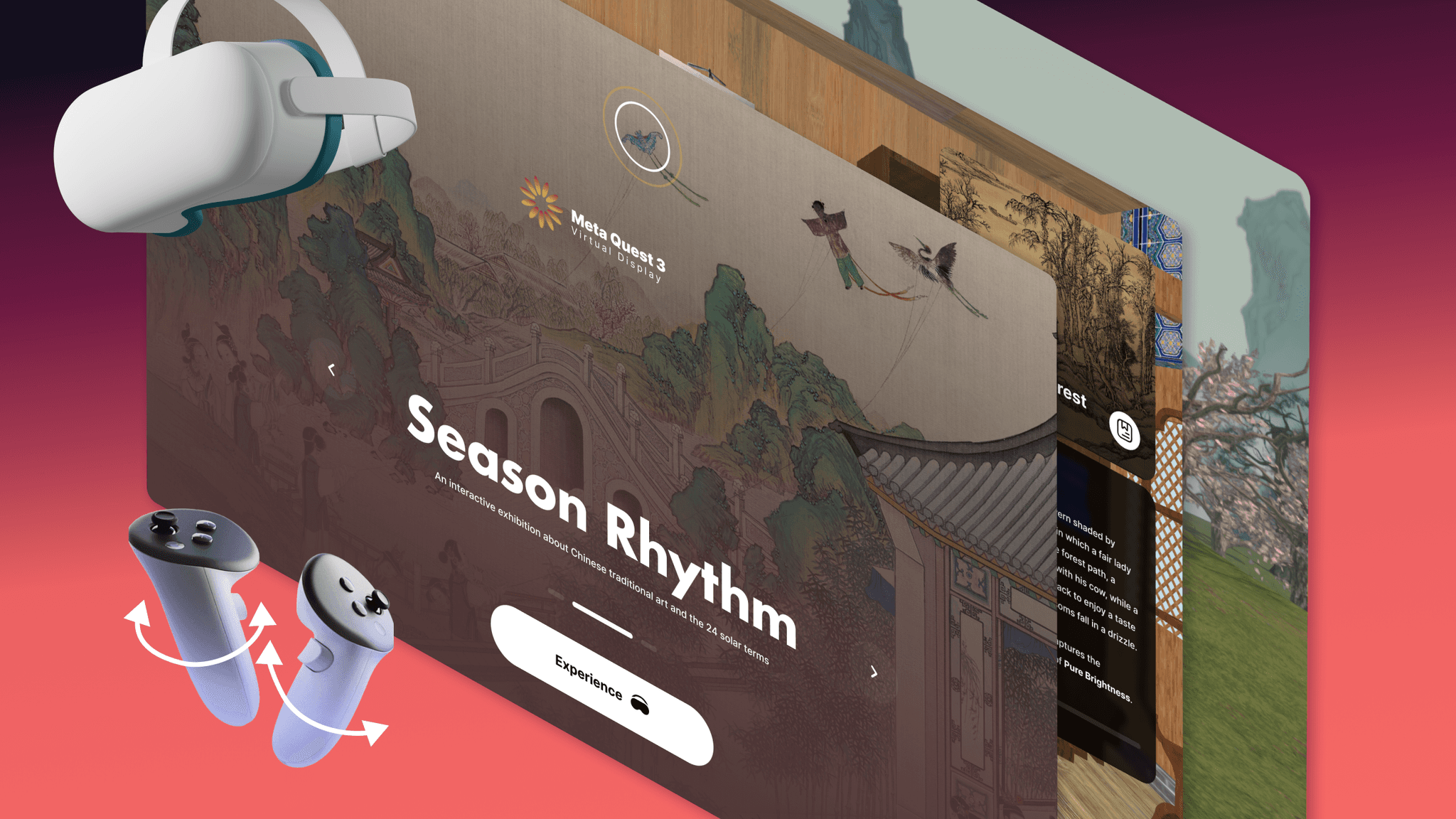
Part game, part exhibition
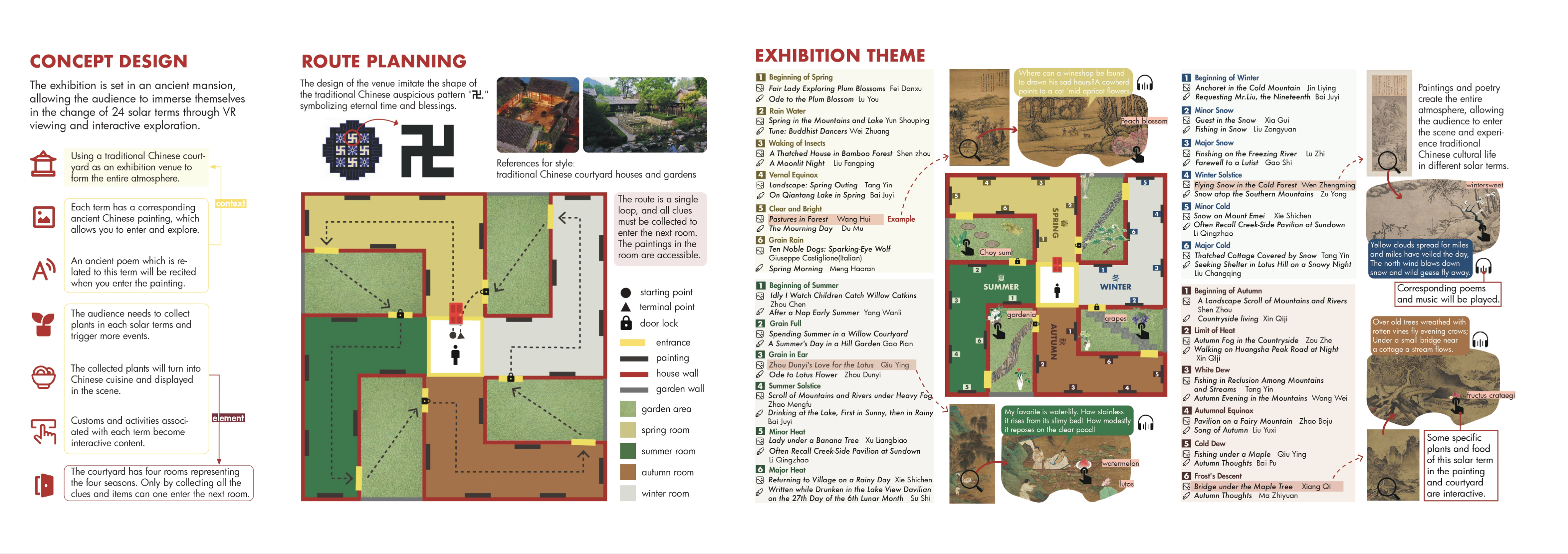
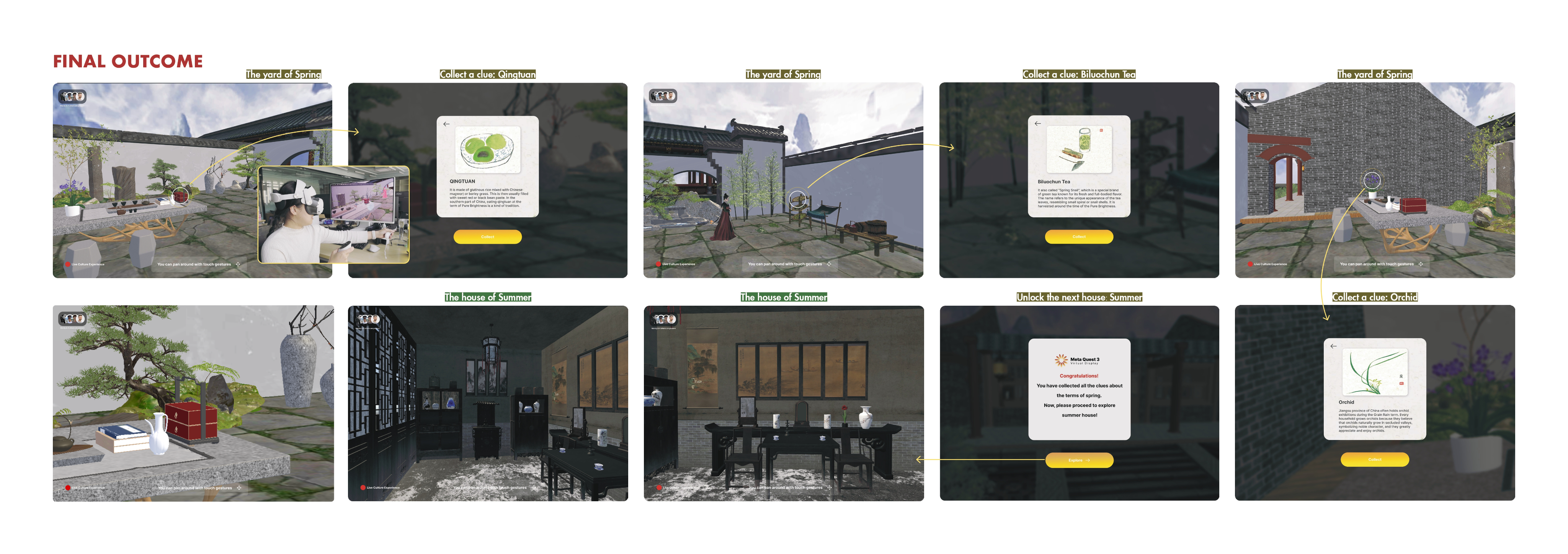
I combined collectible mechanics from puzzle games with the structure of an art exhibition. Visitors begin in the spring room, which contains six paintings—one for each of spring’s six solar terms. They enter each painting, explore its world, and collect seasonal foods, objects, and cultural clues before unlocking summer. After exploring all four seasons and completing each collection, they reach the final scene.
After seven years of academic training in art history, I wanted culture and history to extend beyond books, lectures, memorisation, and museums. They could also be explored interactively and enjoyed. To test the theme and overall direction, I showed the prototype to eight classmates and teachers and asked for candid feedback. Their response gave me the confidence to continue developing the concept.
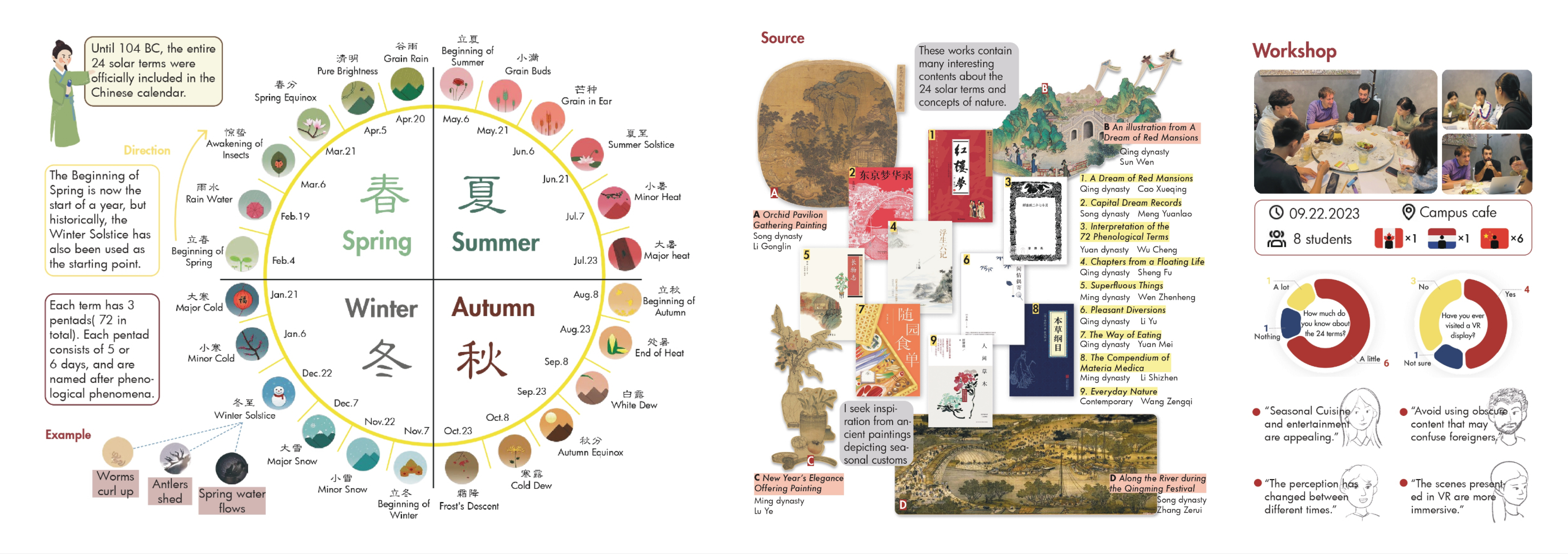
Curation: turning research into an environment
The curatorial work required the most attention. The challenge was coordinating many details—poems, plants, objects, foods, and seasonal practices—so that each scene felt historically grounded and atmospherically coherent.
I began by choosing a poem for each solar term, then followed the clues within it. For Qingming, the poem evokes rain, willows, and spring outings. I added fine rain and willow trees, then placed qingtuan and kites throughout the scene for visitors to discover. I drew on Chinese art history, classical poetry, fiction, and opera, then recomposed those references into a complete environment. The curation relied on my own art-historical research and judgement.
Using generative AI to visualise the concept
Once the exhibition content was in place, I used generative AI to visualise the experience from the visitor’s perspective as a storyboard and user journey. I wanted an illustrated style but could not produce it efficiently by hand. As Midjourney and Stable Diffusion were beginning to gain traction, I selected reference images, refined prompts to achieve a consistent atmosphere, and made final adjustments in Procreate. Within a few hours, I produced a coherent set of storyboard images.
The process showed me that when the concept is clear and the tool is used deliberately, AI can extend a designer’s capabilities. Season Rhythm became my entry point into generative AI and interactive design.
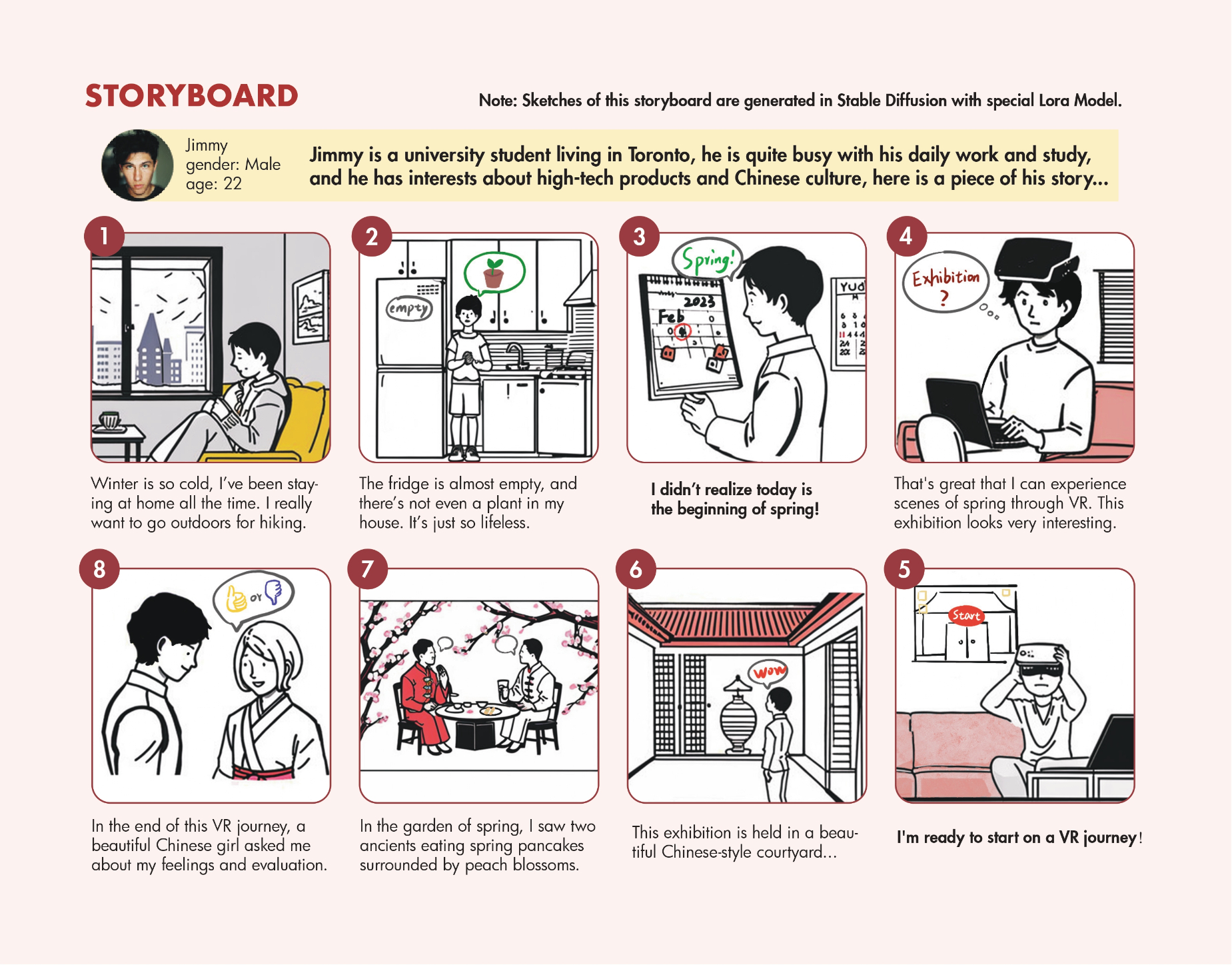
From an empty scene to a spring you could enter
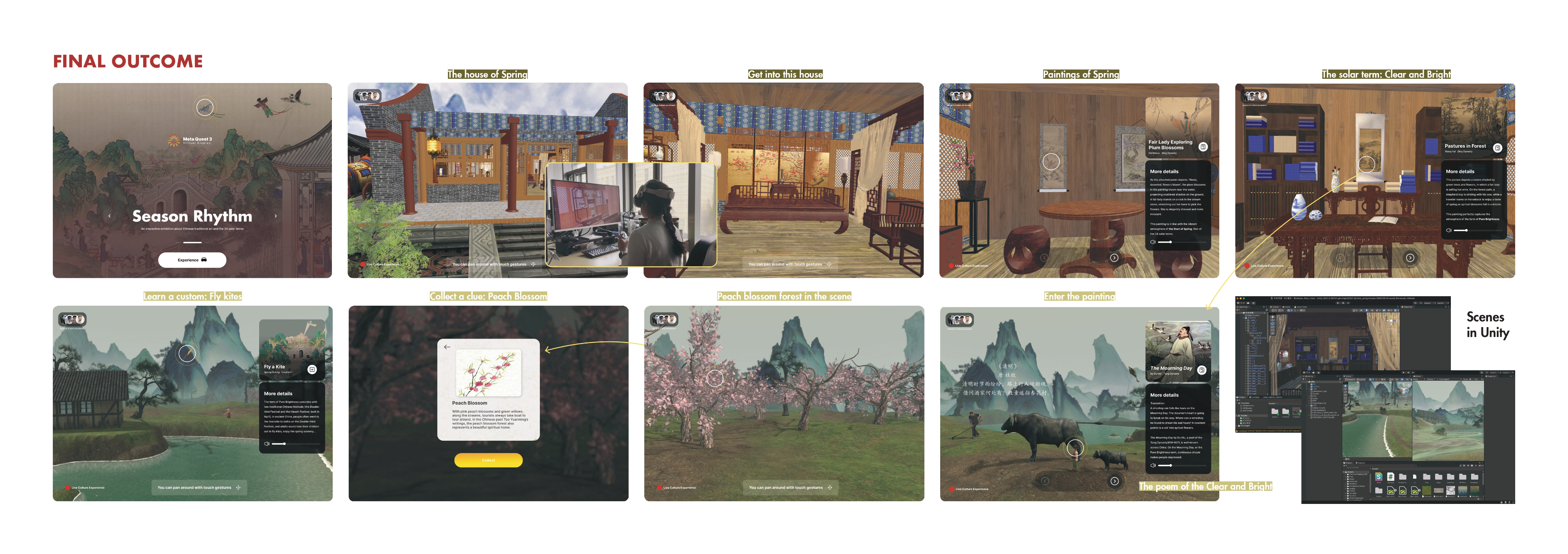
With the content and visual direction in place, I built the experience in Unity. Spring became the working sample, with three connected scenes: a traditional Anhui residence, the landscape inside a Qingming painting, and a small courtyard outside the house.
I first blocked out each environment, set the lighting and sky, and established the overall mood. Then I built the house and surroundings, added interior objects and background figures, and layered in the interactive touchpoints: six paintings for spring’s six solar terms, each serving as a portal; six seasonal foods; and six cultural objects that reveal contextual cards when approached. Finally, I created the information overlays and transitions between scenes, then tested and refined the experience repeatedly in the headset.
Because Unity was new to me, much of the process involved learning through implementation and revising the plan as technical constraints emerged. Another challenge was preserving the spirit of traditional painting: its negative space, brushwork, and non-realist atmosphere can disappear when translated too literally into 3D. Within the constraints of my Unity experience and the available assets, I had to decide carefully which qualities to preserve and which elements to rebuild.
One week later, I entered the scene for the first time on a Meta Quest 3. Seeing an imagined environment at full scale—and being able to reach out and interact with it—was the project’s most immediate reward.
Looking back, Season Rhythm helped me develop a practical approach to design. Rather than waiting to master a tool, I begin with an idea worth making and use the skills available to turn it into something people can see and experience, even if the first version is only a rough demo. Unity and generative AI both helped me make ideas tangible while I continued learning.
It also clarified what I care about most: using new technology to reinterpret culture and art as experiences people can enter and feel, rather than material confined to specialist study. That thread began with my art history background and has continued through my later work with AI and interactive media.